What do these project photos show?
Each project below is built from photographs taken during or after the works. The descriptions stick to what can be seen: the type of block, the layout, the stage of the job and the tools in use. They are here to show how vehicle surfaces are put together, not to make claims about size, duration or results.
If one of these surfaces resembles what you have in mind, send us a photo of your own drive or yard and mention which project it reminds you of. The services behind them are industrial yards, car parks and communities and driveway block paving.
How is a double-T yard built, stage by stage?
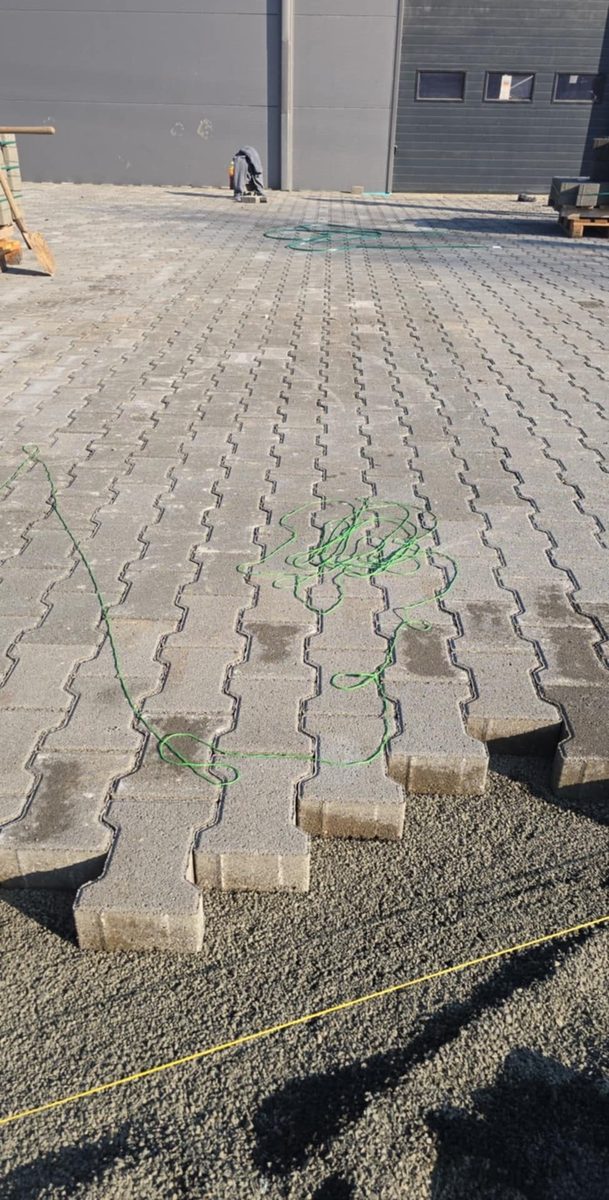
The industrial projects below follow the full sequence: a crushed-stone base screeded with an aluminium rail and compacted with a plate compactor, a dark grit bed levelled with a rail, then grey double-T blocks laid to a string line, cut at the edges and compacted. The finished photos show the result outside buildings and roller doors.
Several details recur in these photos and are worth looking for on any quote you receive: the rail used to keep the laying course at an even depth, the string line that keeps long rows straight, cut pieces placed at the edges rather than in the middle of the surface, and compaction after laying. The reasoning behind each step is explained in our guide to the base for different traffic loads.
Where can I see the finished surfaces?
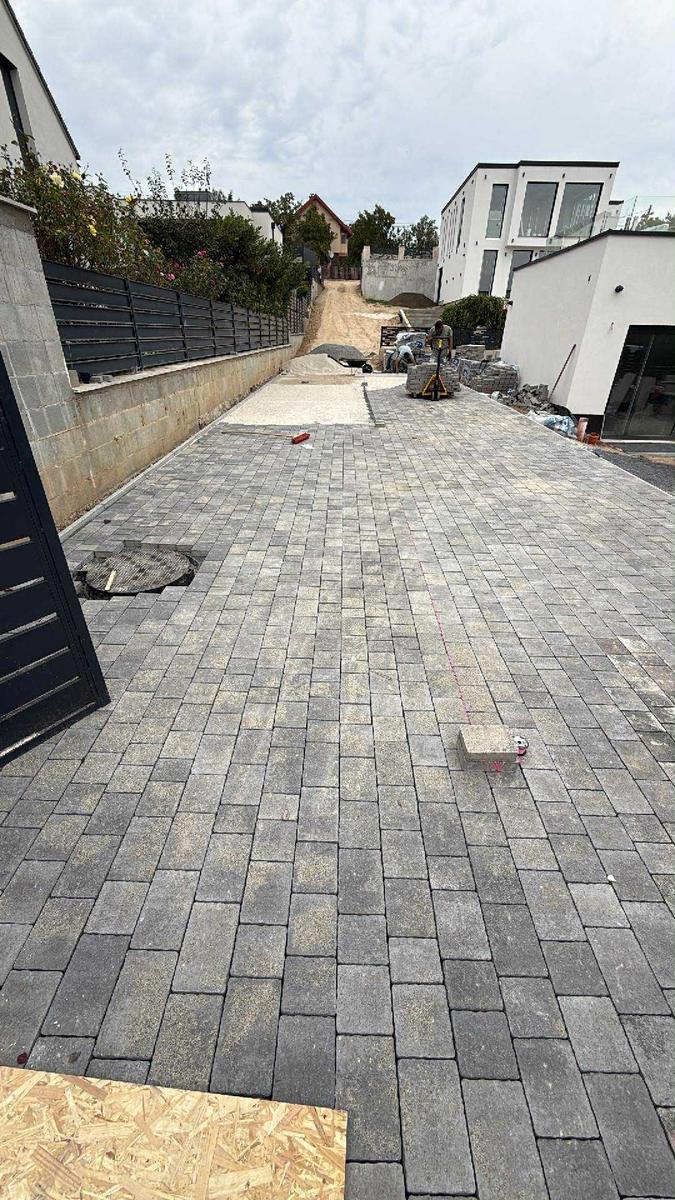
The last projects show completed work: a large double-T surface with street lamps, a finished yard in front of a building, a sloping driveway in blended rectangular blocks leading to a modern house with an inspection cover set into the paving, and two parallel paths in multi-size grey blocks. More pictures are in the gallery.
Preparing the base outside an industrial unit
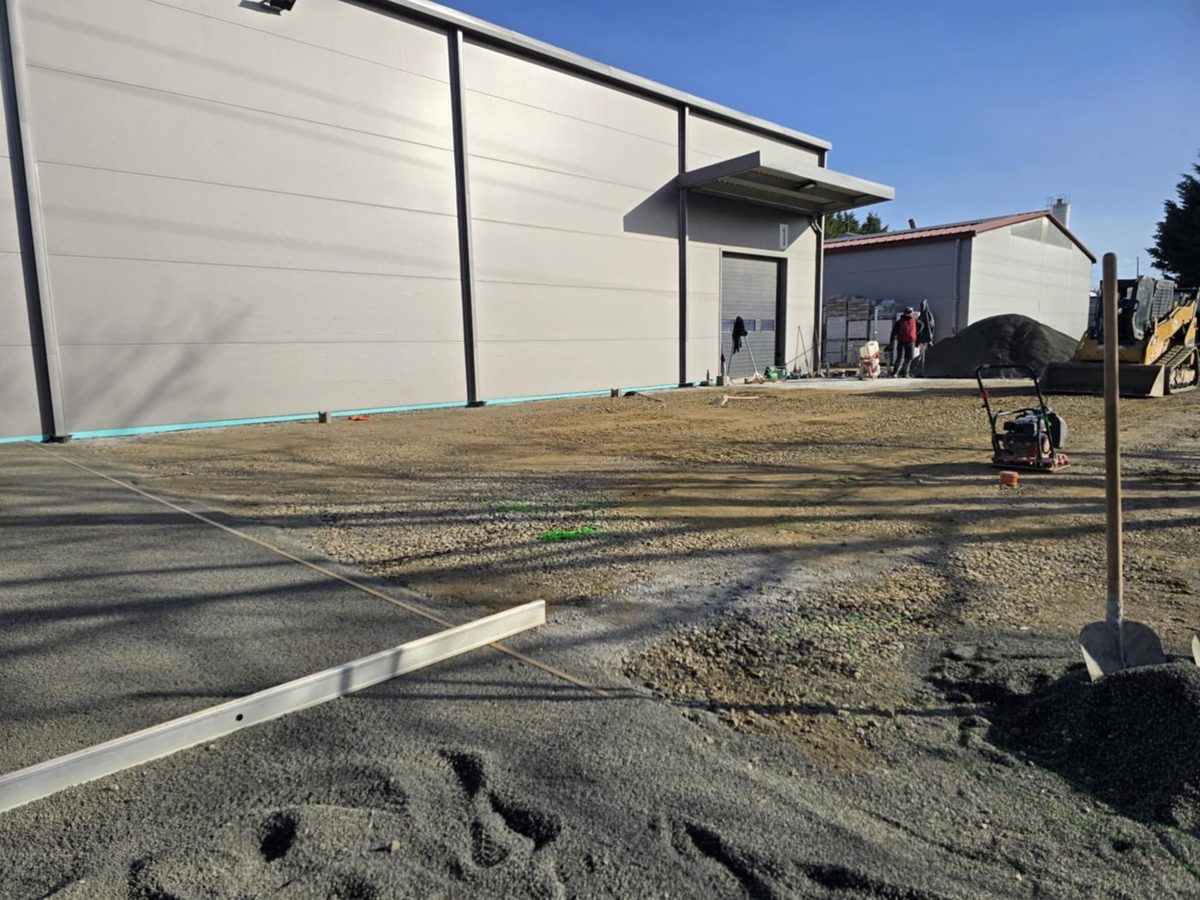
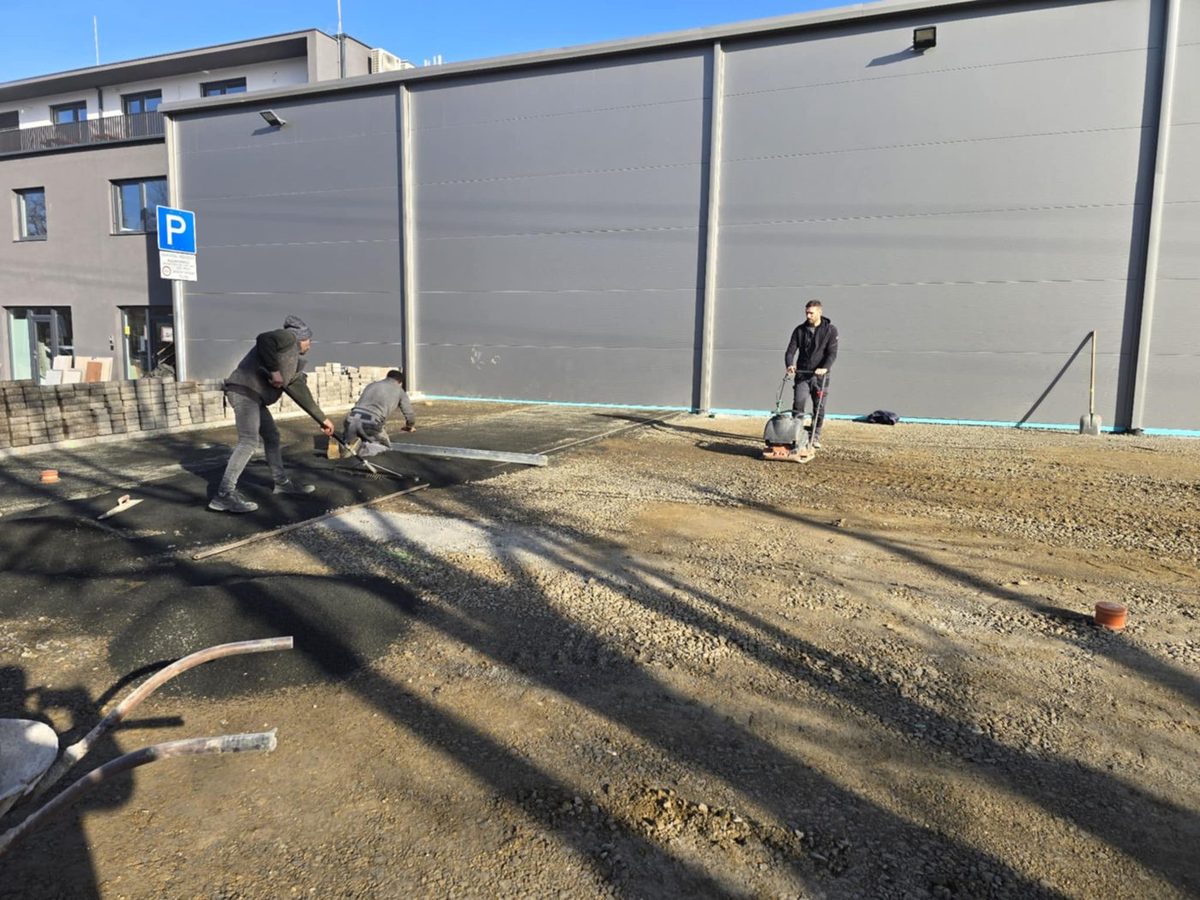
In front of an industrial unit, crushed stone is spread for the base, levelled with an aluminium screed rail and compacted with a plate compactor. The second photo shows the crew screeding a dark grit laying course with a rail before any block is placed.
Laying double-T blocks to a string line
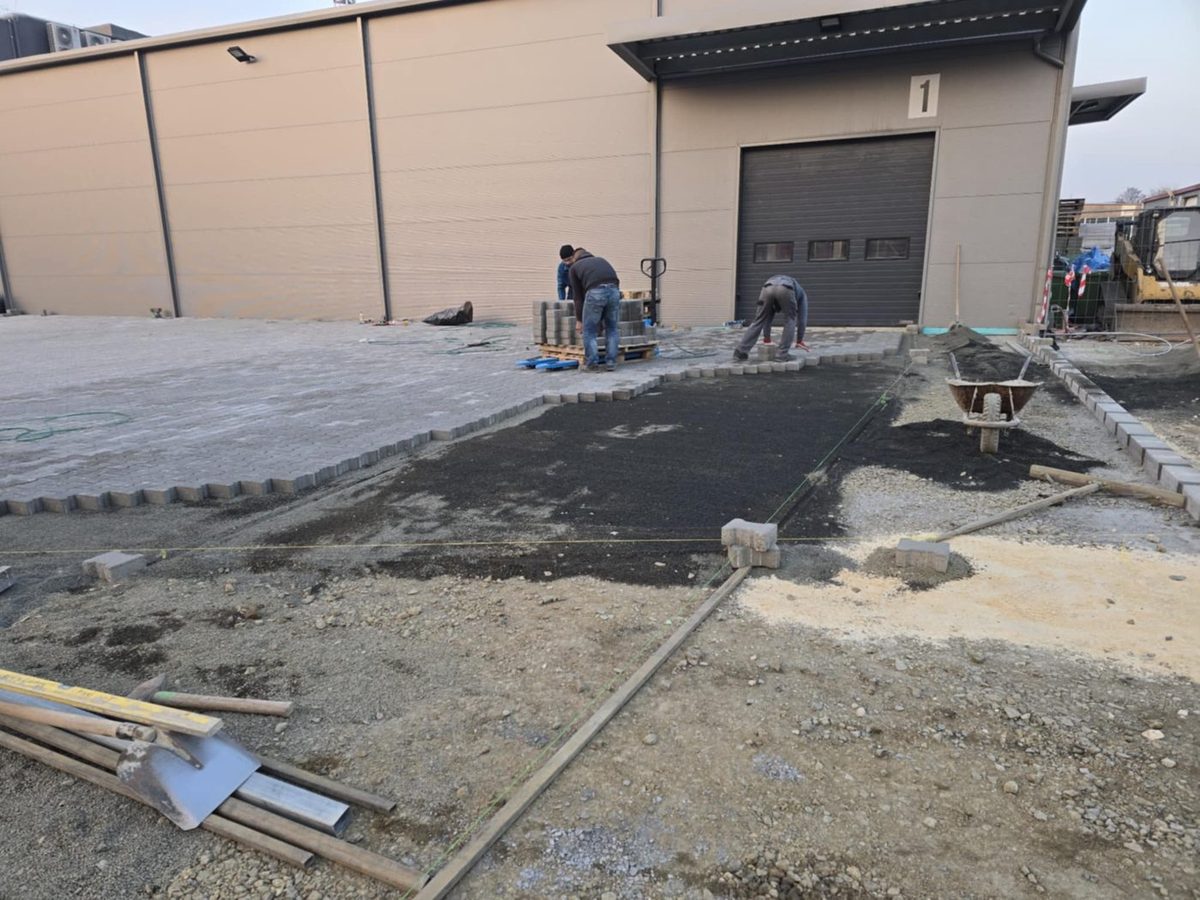
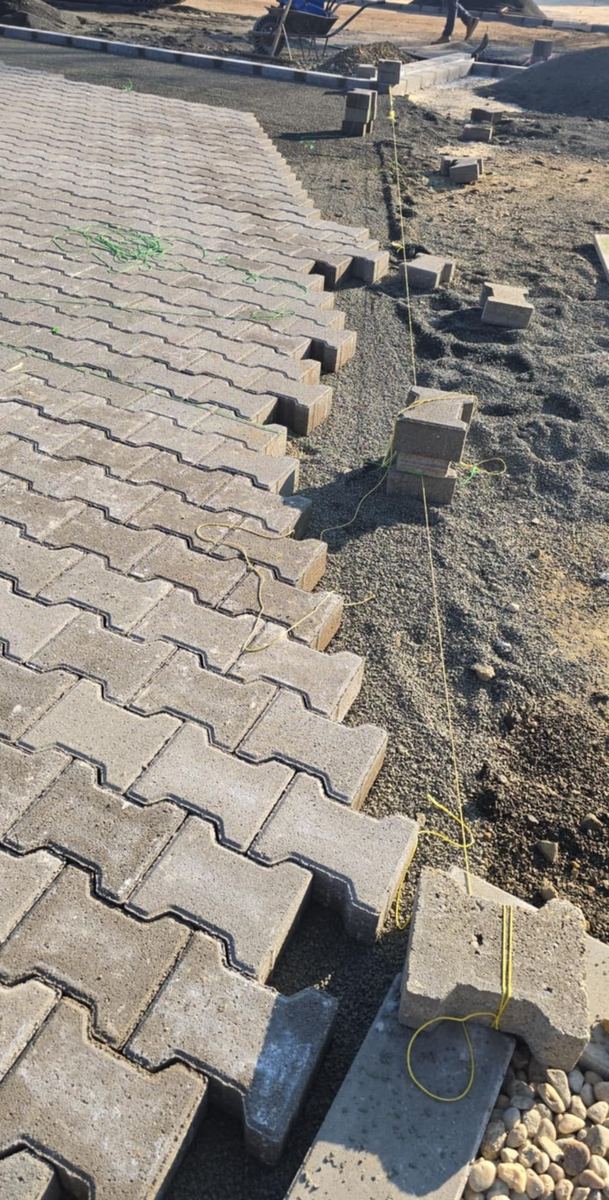
Grey double-T blocks are laid along a string line over a crushed-stone bed, with a green marker line keeping the rows straight as the laying face advances. Outside the unit, pallets of blocks are moved to the laying face with a pallet truck.

Compacting and cutting in an industrial car park
Outside an industrial building, a plate compactor settles the newly laid blocks while edge pieces are cut to fit. A parking sign stands at the edge of the area being paved.
Large industrial area with machinery
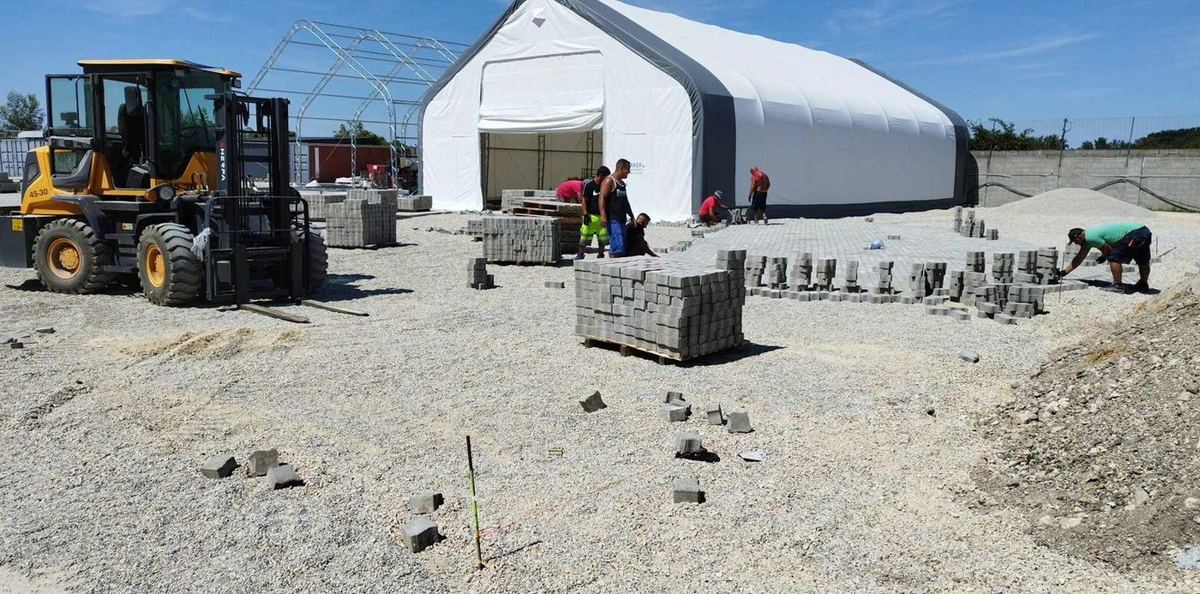
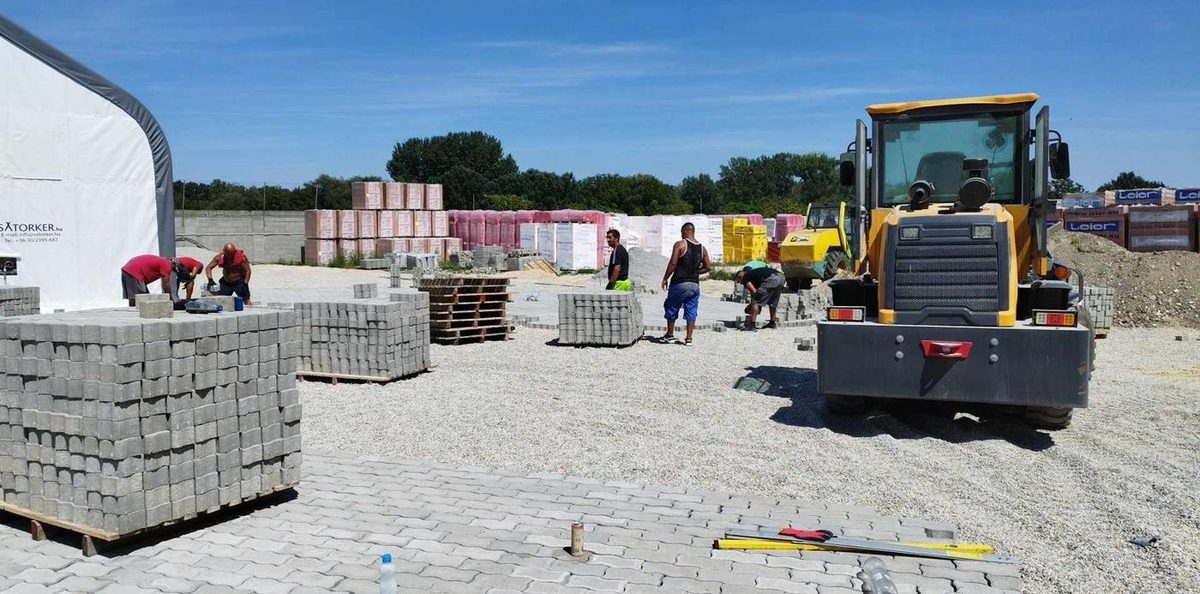
A large industrial area in front of a tent-style hall is paved with the help of a loader, pallets of blocks and a team of workers. The second view, from another angle, shows the front loader moving material across the site.
Long double-T yard and roller-door frontage
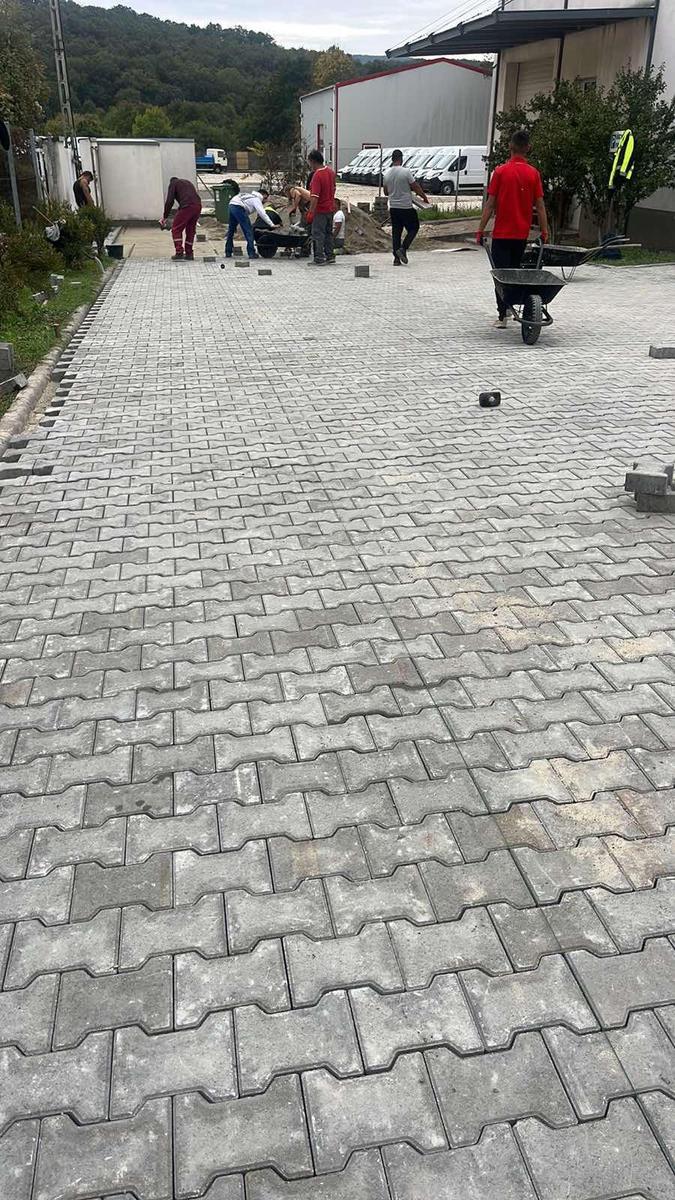
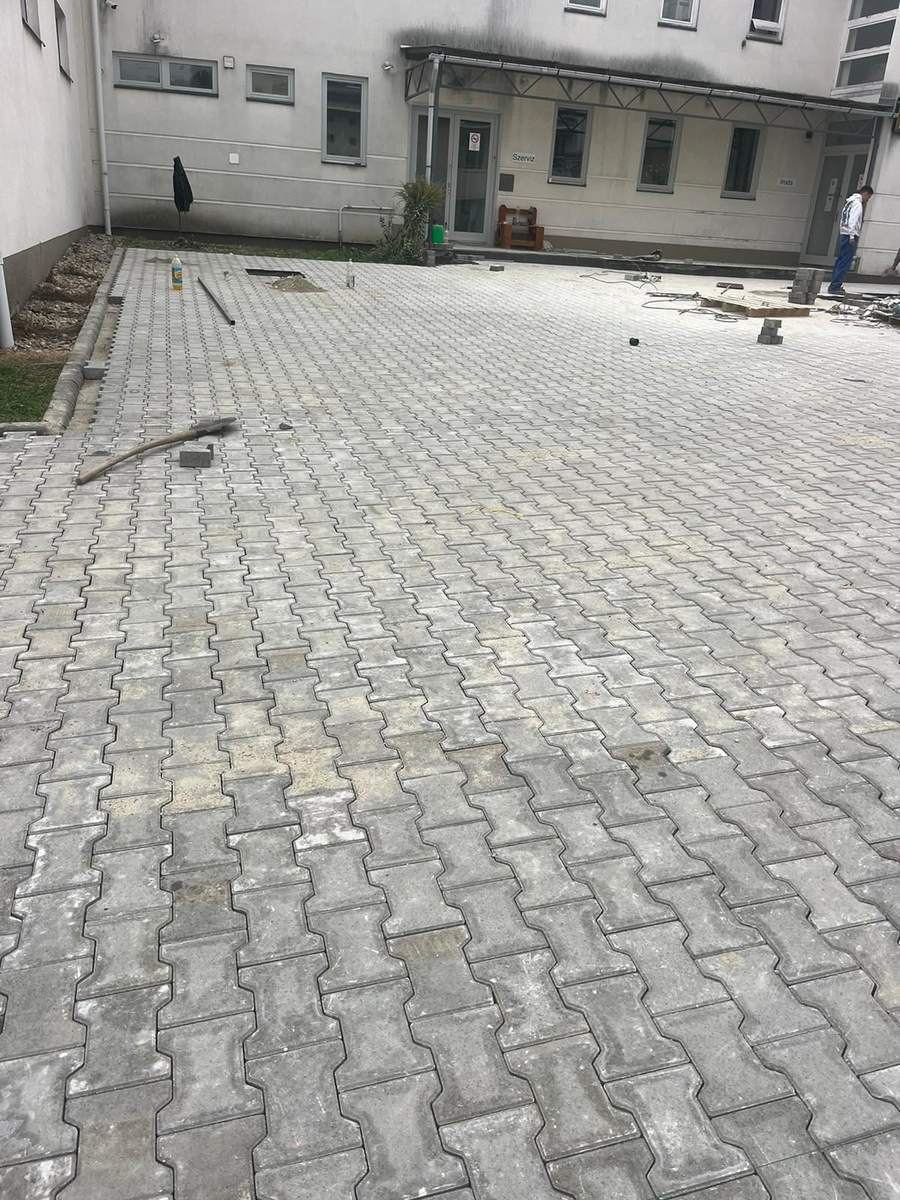
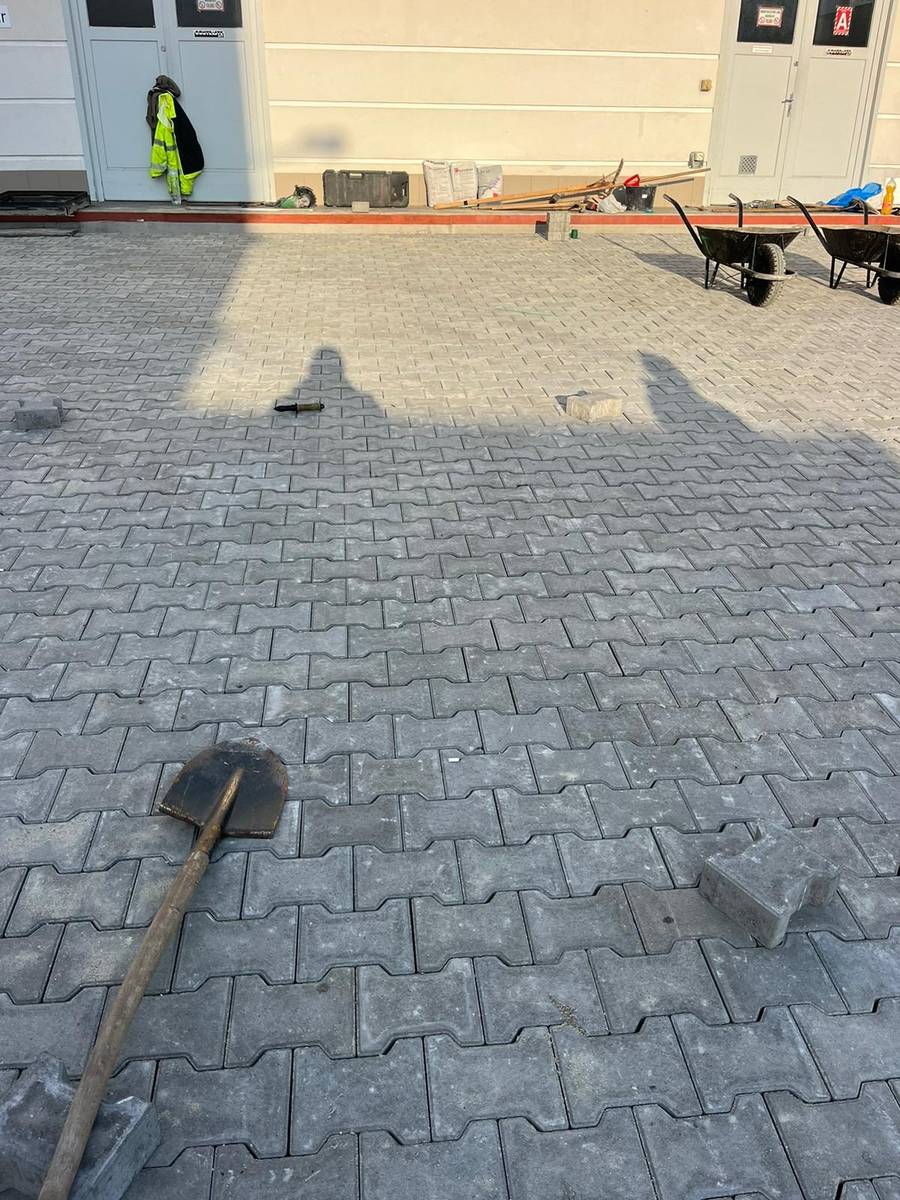
A long yard in double-T blocks with workers and a wheelbarrow; a double-T yard reaching a roller door, with a pile of sand on the surface; a finished grey double-T yard in front of a building; and a close view of a finished double-T surface with a spade.

Large double-T car park with street lamps
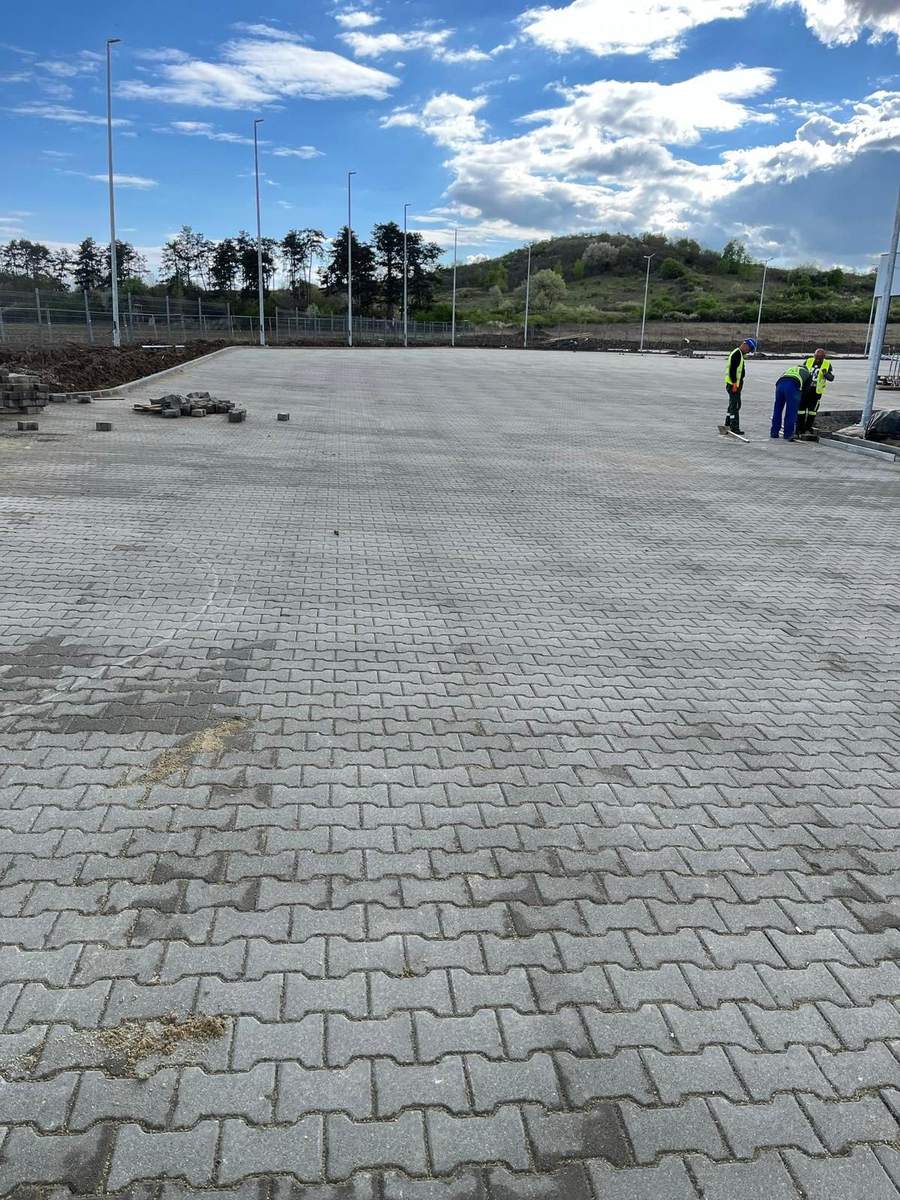
A large, finished surface in grey double-T blocks, with lamp posts standing within the paved area.
Sloping driveway to a modern house
A sloping driveway in rectangular blocks of blended tones rises towards a modern house, with an inspection cover set into the paving.
Two parallel paths in multi-size blocks
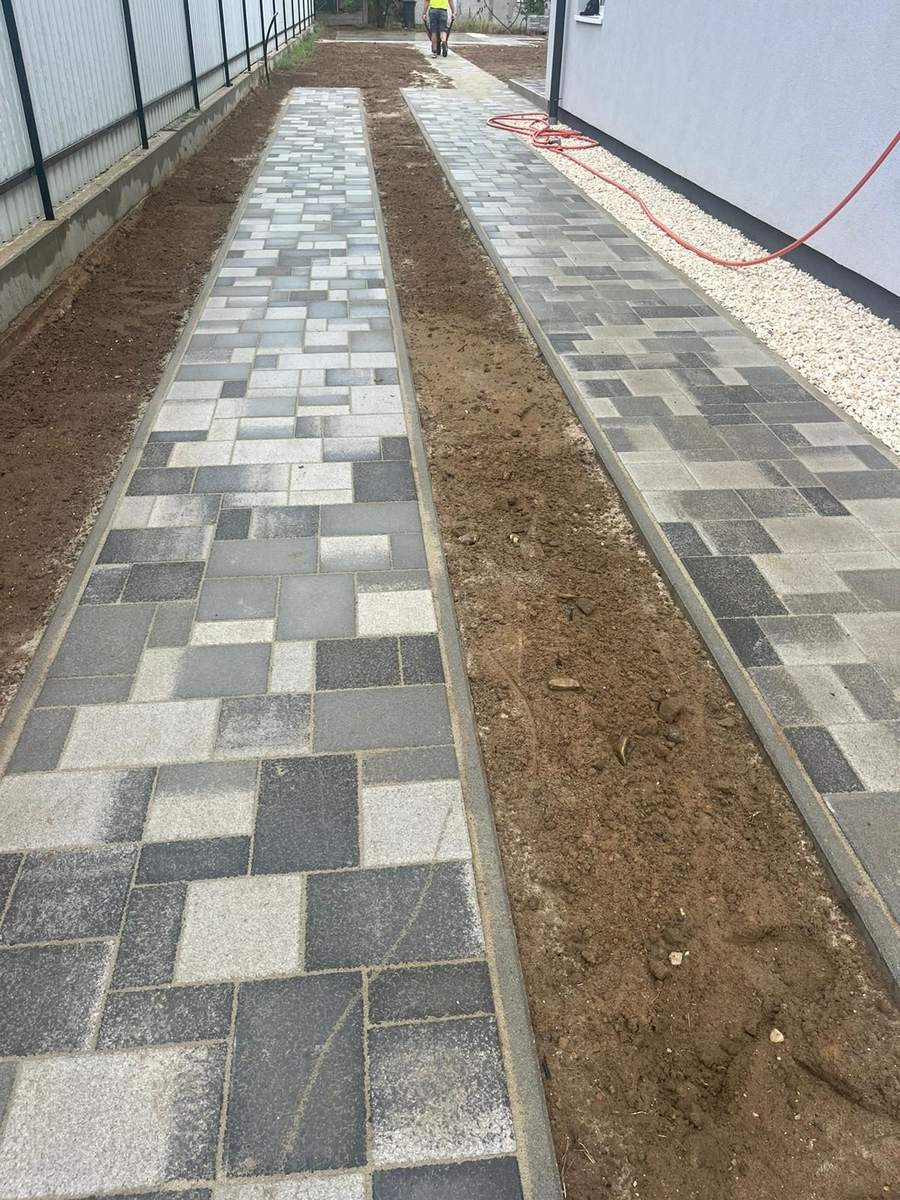
Two parallel paths in blended grey multi-size blocks run between a building and a fence, with a strip of soil between them.